
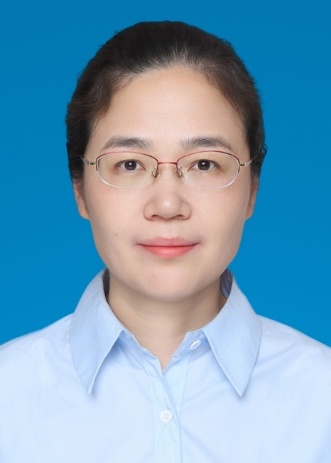
Basic Information
Name:Zhang Guimin
Department: College of Life Science and Technology, Beijing University of Chemical Technology
Position: Professor
Educational Background: Doctoral Degree
E-mail: 2021500017@buct.edu.cn
Educational Experience
Enrollment Date | Graduation Date | Degree Granting Institution | Educational Background |
2003-09-01 | 2006-06-30 | Huazhong Agricultural University | Doctoral Degree |
1997-09-01 | 2000-06-28 | Huazhong Agricultural University | Master’s Degree |
1993-09-01 | 1997-06-25 | Huazhong Agricultural University | Bachelor’s Degree |
Work Experience
Start Date | End Date | Affiliation |
2021-05-01 | Present | Beijing University of Chemical Technology |
2011-10-03 | 2012-10-05 | University of Florida |
2007-11-09 | 2011-09-30 | Institute of Microbiology, Chinese Academy of Sciences |
2000-07-03 | 2021-04-20 | Hubei University |
Academic & Social Positions
Member & Deputy Secretary-General, Expert Committee of the "Industrial Enzyme Industry Technology Innovation Strategic Alliance", Ministry of Science and Technology
Member, Enzyme Engineering Committee, Chinese Society for Microbiology
Member, Branch of Biosensing, Biochip and Nanobiotechnology, Chinese Society of Biotechnology (2022-2027)
Director, 2nd Council of China Biotech Fermentation Industry Association; Director, Enzyme Preparation Branch
Director, 6th Council of Enzyme Preparation Branch, Chinese Institute of Food Science and Technology
Editorial Board Member, Acta Microbiologica Sinica (2021-2026)
Editorial Board Member, Microbiology Bulletin (2024-Present)
Editor, Microbial Cell Factories
Chairperson, Enzyme Engineering Committee, Hubei & Wuhan Society for Microbiology (2018-2023)
Vice Chairperson, Mycology Committee, Hubei & Wuhan Society for Microbiology (2013-2023)
Standing Director, Hubei & Wuhan Society for Microbiology (2018-2023)
Research Fields in Detail
1. Protein Engineering
Develop various protein engineering methods for the molecular modification of hydrolases:
Improved the activity and stability of zearalenone degrading enzyme, PG enzyme, endotoxin degrading enzyme, amylase, etc. via rational design.
Enhanced the activity and stability of xylanase and pectinase, and altered their hydrolysis products via semi-rational design.
Realized the modification of cleavage sites of HRV3C protease and SUMO protease, and achieved traceless excision of fusion tags for medical proteins through yeast surface display combined with high-throughput screening by flow cytometry.
2. Microbial Expression System Optimization
Proficient in Escherichia coli, Bacillus subtilis and Pichia pastoris expression systems, and led the team to optimize the three systems for high-yield secretory expression of engineered enzymes:
Constructed a controllable self-lysis expression system for E. coli to release target proteins after high-level expression.
Established a gene editing and bidirectional regulation system for Bacillus subtilis (up-regulating chaperones and down-regulating proteases) to significantly improve heterologous protein expression.
Developed a universal high-efficiency expression strategy for Pichia pastoris, realizing secretory expression and achievement transformation of multiple heterologous proteins.
Built direct and indirect surface display systems for E. coli and yeast, establishing a cell surface-based cascade catalysis and high-throughput protease screening system.
3. Biosensing
Constructed high-sensitivity microbial biosensing systems for toxicity detection of degradation products of mycotoxins and environmental pollutants, with the advantages of time-saving, low cost and high efficiency:
Built an E. coli detection system for salicylic acid, benzoic acid and their derivatives via transcription factor/promoter modification and host screening, with 100-1000 times higher sensitivity than reported systems.
Constructed yeast sensor cells for small molecule compounds (e.g., estrogen) based on nuclear receptor modification and protease-activated cascade amplification system, and screened the first genuine detoxification strain for zearalenone using this system.
Teaching Work
Undergraduate Courses
Course Name | Course Nature | Total Class Hours | Key Academic Years & Enrollment |
Microbiology | Compulsory Professional Course | 56 | 2021-2025 (Enrollment: 6-88 students per session) |
Understanding Biology from a Molecular Perspective: Introduction to Structural Biology | Quality Education Course | 16 | 2022 (Enrollment: 87 students) |
Cell Biology and Cell Engineering | Compulsory Professional Course | 48 | 2021 (Enrollment: 44 students) |
Postgraduate Courses
Course Name | Course Nature | Total Class Hours | Offered Years |
Microbial Biotechnology | Public Basic Course (A) | 32 | 2021-2025 |
Research Projects
Vertical Projects
High-sensitivity synthetic biological system for new pollutant identification and toxicity sensing, National Key R&D Program of China, 2024-12-19 to 2029-11-30
Key technologies and mechanisms of yeast chassis for synthesizing high-molecular-weight proteins, Science and Technology Project of Provincial/Municipal Autonomous Region, 2024-10-01 to 2027-09-30
Study on the molecular recognition mechanism of zearalenone mycotoxins and construction of yeast cell sensors, National Natural Science Foundation of China, 2024-01-01 to 2027-12-31
High-efficiency expression and production of LPS degrading enzyme, National Key R&D Program of China, 2022-11-07 to 2026-10-31
Study on the degradation mechanism of zearalenone by Bacillus subtilis, National Natural Science Foundation of China, 2020-01-01 to 2023-12-31
Horizontal Projects
Development of Chryseobacterium proteolyticum (a protein glutaminase-producing strain), Commissioned Science and Technology Project by Enterprises/Institutions, 2023-07-03 to 2028-07-02
Development of a series of proteases for mass spectrometry analysis, Commissioned Science and Technology Project by Enterprises/Institutions, 2022-11-20 to 2023-12-31
Improving the catalytic efficiency and stability of enzyme preparations by nanotechnology, Self-selected Project, 2022-10-20 to 2023-10-19
Site-directed mutagenesis design of zearalenone degrading enzyme, Self-selected Project, 2022-05-09 to 2023-05-08
Site-directed mutagenesis design of Staphylococcus aureus phage lysin, Other Research Projects, 2021-07-05 to 2022-07-04
Published Papers
2023
Wang, H., Lu, Z., Lin, X., Wang, M., Jiang, T., Zhao, G., Xiang, L., Xv, J., Jiang, S., & Zhang, G. (2023). The N-terminal hydrophobicity modulates a distal structural domain conformation of zearalenone lacton hydrolase and its application in protein engineering. Enzyme and Microbial Technology.
Before 2023
Hu, X., Zhao, X., Wang, M., Wu, P., Lu, Z., & Zhang, G. (2022). Rationally tailoring the halophilicity of an amylolytic enzyme for application in dehydrating conditions. Biochemical Engineering Journal.
Wang, J., Zhang, N., Huang, Y., Li, S., & Zhang, G. (2022). Simple and efficient enzymatic procedure for p-coumaric acid synthesis: Complete bioconversion and biocatalyst recycling under alkaline condition. Biochemical Engineering Journal.
Zhang, F., Zheng, H., Xian, Y., Song, H., Wang, S., Yun, Y., Yi, L., & Zhang, G. (2022). Profiling Substrate Specificity of the SUMO Protease Ulp1 by the YESS-PSSC System to Advance the Conserved Mechanism for Substrate Cleavage. International Journal of Molecular Sciences.
Wang, M., Hu, H., Zhang, B., Zheng, Y., Wu, P., Lu, Z., & Zhang, G. (2022). Discovery of a New Microbial Origin Cold-Active Neopullulanase Capable for Effective Conversion of Pullulan to Panose. International Journal of Molecular Sciences.
Cui, X., Yuan, X., Li, S., Hu, X., Zhao, J., & Zhang, G. (2022). Simultaneously improving the specific activity and thermostability of α-amylase BLA by rational design. Bioprocess and Biosystems Engineering.
Intellectual Property
Invention Patent
A neutral zearalenone degrading enzyme mutant with improved specific enzyme activity.
Honors and Awards
To be supplemented
Student Recruitment
To be supplemented