
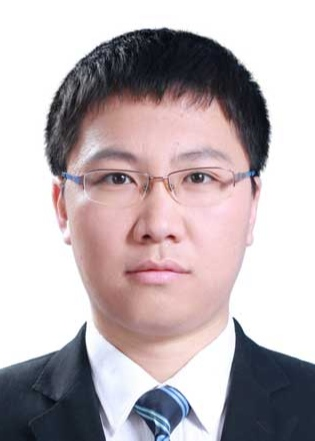
Basic Information
Name:Feng Yue
Department: College of Life Science and Technology, Beijing University of Chemical Technology
Position: Professor; Party Branch Secretary of Biotechnology Department
Educational Background: Doctoral Degree
E-mail: fengyue@buct.edu.cn
Office Address: B504, Comprehensive Building
Research Field: Interaction between Microorganisms and Host Immune Systems
Personal Profile
Professor Yue Feng has long focused on the systematic research of the interaction between microorganisms and host immune systems. Based on two closely related microbe-host systems (phage-bacterial host and pathogenic microbe-human host), she has deeply studied the molecular mechanisms of microbial antagonism against host immune systems, revealing the inhibitory mechanisms of phages on the bacterial CRISPR-Cas immune system (including the inhibition of its immune recognition and immune clearance processes), as well as the modification and activity inhibition mechanisms of pathogens on human immune system-related proteins.
As the corresponding author (including co-corresponding author), her systematic research achievements have been published in top international journals such as Nature (2 papers), Cell (2 papers), Molecular Cell (3 papers), Nature Chemical Biology (3 papers), and Nature Communications (2 papers).
She has presided over a number of scientific research projects including the Excellent Youth Science Fund of the National Natural Science Foundation of China (concluded in December 2021), General Program, Youth Program, as well as one project and one sub-project of the National Key R&D Program. She has won many honors and awards, including National Young Post Expert (2020), Young Beijing Scholar (2024), the 19th Higher Education Young Science Award of the Huo Yingdong Education Foundation (2024), Beijing Outstanding Young Talent (2020), the Second Prize of the Chinese Medical Science and Technology Award (2024), China's Top 10 New Scientific and Technological Talents (2018), Beijing Science and Technology Star (2019), and Excellent Instructor Award of the Beijing University Young Teachers' Teaching Basic Skills Competition (2023).
In terms of talent cultivation, 10 postgraduates in her laboratory have won the title of Beijing Outstanding Graduate, 6 have won the National Scholarship for Postgraduates, and 1 has won the President's Award of Beijing University of Chemical Technology and the President's Scholarship for Doctoral Students of Beijing University of Chemical Technology. She has guided undergraduates to win honors such as Excellent Undergraduate Graduation Design (Thesis) of Beijing General Universities.
Educational Experience
Enrollment Date | Graduation Date | Degree Granting Institution | Educational Background |
2008-09-10 | 2013-07-10 | Tsinghua University | Doctoral Degree |
2004-08-10 | 2008-07-10 | Beijing Forestry University | Bachelor’s Degree |
Work Experience
Start Date | End Date | Affiliation |
2013-07-18 | Present | Beijing University of Chemical Technology |
Academic & Social Positions
Member, Youth Working Committee, Chinese Society of Biotechnology
Review Expert, National Natural Science Foundation of China
Review Expert, Beijing Natural Science Foundation
Member, Chinese Society for Biophysics
Member, Chinese Society of Biochemistry and Molecular Biology
Research Field in Detail
Professor Yue Feng has long focused on the molecular mechanisms of the interaction between microorganisms and host immune systems. Based on two closely related research systems (phage-bacterial host and pathogenic microbe-human host), she has carried out systematic research on the mechanisms of microbial antagonism against host immune systems, clarifying the key molecular pathways and regulatory mechanisms of microbes evading or inhibiting host immune surveillance, and providing important theoretical basis and potential drug targets for the development of anti-infective drugs and the regulation of immune responses.
Teaching Work
Undergraduate Courses
Course Name | Course Nature | Total Class Hours | Key Academic Years & Enrollment |
Cell Biology and Cell Engineering | Compulsory Professional Course | 48 | 2021-2025 (Enrollment: 18-63 students per session) |
Biochemistry | Compulsory Professional Course | 72 | 2020-2025 (Enrollment: 25-68 students per session) |
Structural Biology | Optional Professional Course | 16 | 2020 (Enrollment: 22 students) |
Research Projects
University-Level Projects
Structural and functional study of NPR protein, a potential receptor for salicylic acid in plants, College of Life Science and Technology, Concluded by 2016-12-31
Structural and functional study of lignin monomer-ferulate transferase, College of Life Science and Technology, Concluded by 2016-12-31
Structural and functional study of NPR1 protein for salicylic acid perception in Arabidopsis, College of Life Science and Technology, Concluded by 2017-12-31
Vertical Projects
High-efficiency preparation technology of high-efficiency transmembrane anti-wrinkle proteins, National Key R&D Program of China, 2022-11-01 to 2026-10-31
R&D of new technologies for precise recognition of ubiquitin code, National Key R&D Program of China, 2022-11-01 to 2027-10-31
Mechanism study of abnormal ERAD of cholesterol metabolic proteins mediated by MARCHF6 in male diabetic hypogonadism, Science and Technology Project of Provincial/Municipal Autonomous Region, 2022-10-28 to 2024-10-28
Molecular mechanism of novel anti-CRISPR proteins inhibiting type I-F CRISPR-Cas system, National Natural Science Foundation of China, 2022-01-01 to 2025-12-31
Molecular mechanism of novel ubiquitin modification and ligase and screening and design of its small molecule inhibitors, Science and Technology Project of Provincial/Municipal Autonomous Region, 2019-10-31 to 2022-12-31
Structure and function of enzymes, National Natural Science Foundation of China, 2019-01-01 to 2021-12-31
Study on protein machines in cell haptotaxis and mechanotaxis, National Key R&D Program of China, 2017-07-01 to 2022-06-30
Structural and functional study of NPR protein, a potential receptor for salicylic acid in plants, National Natural Science Foundation of China, 2017-01-01 to 2018-12-01
Molecular mechanism study of ARC3 inhibiting chloroplast FtsZ ring assembly, Science and Technology Project of Provincial/Municipal Autonomous Region, 2015-01-01 to 2016-12-31
Structural and functional study of protein complexes in chloroplast division apparatus, National Natural Science Foundation of China, 2015-01-01 to 2017-12-31
Horizontal Projects
Protein structure analysis of the novel anti-phage defense system "Tianpeng", Other Research Projects, 2024-12-12 to 2025-11-10
Representative Published Papers
Li, D., Xiao, Y., Fedorova, I., Xiong, W., Wang, Y., Liu, X., Huiting, E., Ren, J., Gao, Z., Zhao, X., Cao, X., Zhang, Y., Bondy-Denomy, J., & Feng, Y. (2024). Single phage proteins sequester signals from TIR and cGAS-like enzymes. Nature.
Huiting, E., Cao, X., Ren, J., Athukoralage, J. S., Luo, Z., Silas, S., An, N., Carion, H., Zhou, Y., Fraser, J. S., Feng, Y., & Bondy-Denomy, J. (2023). Bacteriophages inhibit and evade cGAS-like immune function in bacteria. Cell.
Feng, Y., & Wang, H. (2024). An alternative mechanism for recruiting Cas2/3 in a phage-encoded CRISPR-Cas system. Nature Chemical Biology.
Zhang, L., Wang, H., Zeng, J., Cao, X., Gao, Z., Liu, Z., Li, F., Wang, J., Zhang, Y., Yang, M., & Feng, Y. (2024). Cas1 mediates the interference stage in a phage-encoded CRISPR-Cas system. Nature Chemical Biology.
Gao, Z., & Feng, Y. (2023). Bacteriophage strategies for overcoming host antiviral immunity. Frontiers in Microbiology.
Yin, P., Zhang, Y., Yang, L., & Feng, Y. (2023). Non-canonical inhibition strategies and structural basis of anti-CRISPR proteins targeting type I CRISPR-Cas systems. Journal of Molecular Biology.
Liu, X., Zhang, L., Wang, H., Xiu, Y., Huang, L., Gao, Z., Li, N., Li, F., Xiong, W., Gao, T., Zhang, Y., Yang, M., & Feng, Y. (2022). Target RNA activates the protease activity of Craspase to confer antiviral defense. Molecular Cell.
Xie, Y., Zhang, L., Gao, Z., Yin, P., Wang, H., Li, H., Chen, Z., Zhang, Y., Yang, M., & Feng, Y. (2022). AcrIF5 specifically targets DNA-bound CRISPR-Cas surveillance complex for inhibition. Nature Chemical Biology.
Yang, L., Zhang, L., Yin, P., Ding, H., Xiao, Y., Zeng, J., Wang, W., Zhou, H., Wang, Q., Zhang, Y., Chen, Z., Yang, M., & Feng, Y. (2022). Insights into the inhibition of type I-F CRISPR-Cas system by a multifunctional anti-CRISPR protein AcrIF24. Nature Communications.
Mu, Y., Wang, Y., Huang, Y., Li, D., Han, Y., Chang, M., Fu, J., Xie, Y., Ren, J., Wang, H., Zhang, Y., Luo, Z.-Q., & Feng, Y. (2020). Structural insights into the mechanism and inhibition of transglutaminase-induced ubiquitination by the Legionella effector MavC. Nature Communications.
Intellectual Property
Utility Model Patent
An antibody-antigen teaching model, CN219591005U
Invention Patent
A method for improving trehalose synthase activity by the C-terminal fragment of thermophilic bacterial trehalose synthase
Honors and Awards
National Young Post Expert (2020)
Beijing Outstanding Young Talent (2020)
Beijing Science and Technology Star (2019)
China's Top 10 New Scientific and Technological Talents (2018)
Young Beijing Scholar (2024)
The 19th Higher Education Young Science Award of the Huo Yingdong Education Foundation (2024)
The Second Prize of the Chinese Medical Science and Technology Award (2024)
Excellent Instructor Award of the Beijing University Young Teachers' Teaching Basic Skills Competition (2023)
Student Recruitment
The research group is recruiting associate professors and lecturers for a long time, and also enrolling postdoctoral researchers, doctoral and master students. Interested students are welcome to join!