
To enrich the medical knowledge dimensions of teachers and students and foster innovative awareness of medical-engineering integration, the Biomedical Translational Engineering Research Center of Beijing University of Chemical Technology China-Japan Friendship Hospital, together with the Education Department of China-Japan Friendship Hospital, successfully held the second lecture of a series of medical science popularization lectures on the morning of June 9, 2026. This lecture specially invited Researcher Feng Dingqing from the Department of Obstetrics and Gynecology at China-Japan Friendship Hospital to deliver an excellent report titled “Guiding Medical-Engineering Cooperation with Clinical Issues.”
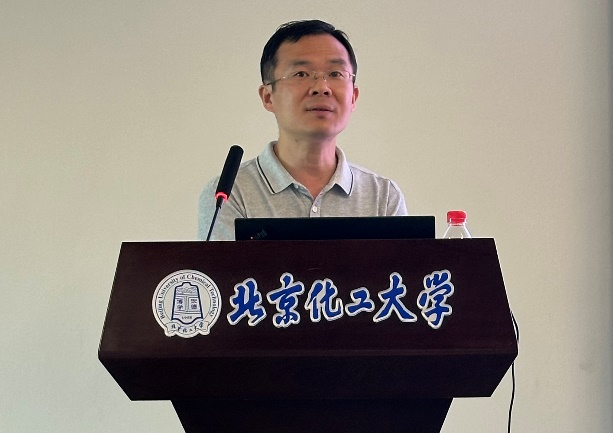
Researcher Feng Dingqing, drawing on more than ten years of practical experience in medical-engineering collaboration, systematically elaborated on a research philosophy that is oriented toward real clinical needs and integrates basic research with applied translation. He pointed out that the key to medical-engineering integration lies in extracting scientific problems from clinical practice and establishing a closed-loop research pathway of “clinical problems—mechanism exploration—application development.” Researcher Feng Dingqing shared real-life cases of clinical translation of several scientific research achievements from his team, and the teachers and students present felt the dedication of “enduring the storm and seeing the moon” and the craftsmanship spirit of “ten years sharpening a sword.” He listed major issues encountered in clinical practice in obstetrics and gynecology, analyzed the urgent need for new technologies, new materials, and new equipment in current clinical practice, and pointed out the entry points and research directions for medical-engineering collaboration for the teachers and students present.
Feng Dingqing is currently a researcher in the Department of Obstetrics and Gynecology at China-Japan Friendship Hospital, holding a PhD in Medicine. He has long been engaged in basic and clinical translational research on gynecologic tumors, with main research areas including tumor immunology, tumor metabolism, and the application of nanomaterials in disease diagnosis and treatment. He has led one National Key R&D Program project, three National Natural Science Foundation projects, and several provincial and ministerial-level projects. As first author or corresponding author, he has published over 30 SCI papers, holds 10 authorized patents, co-authored 2 monographs, and won the Second Prize of the Anhui Provincial Science and Technology Award.
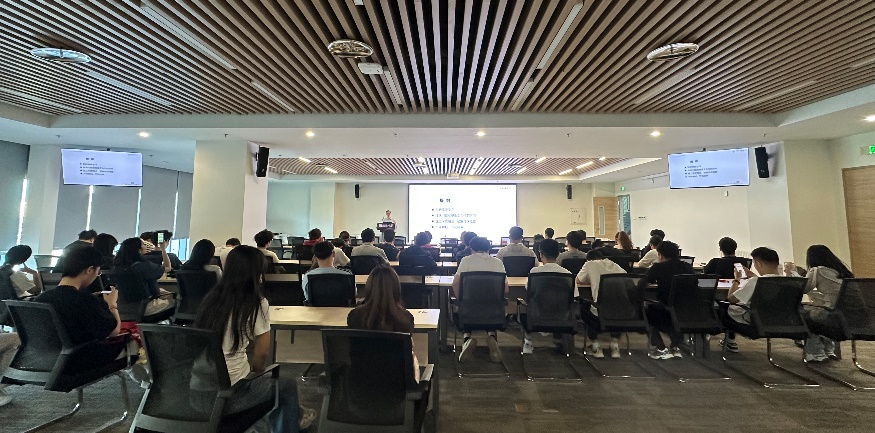
After the lecture, the on-site faculty and students engaged in lively discussions with Researcher Feng Dingqing on topics such as practical issues in medical-engineering collaboration, pathways for research transformation, and interdisciplinary collaboration models.
The event was organized by the Biomedical Translational Engineering Research Center and the Education Office of China-Japan Friendship Hospital of Beijing University of Chemical Technology, while the Party Branch of the Education Office of China-Japan Friendship Hospital and the Student Union of the Clinical Medical School were co-organizers.
Image: Zhao Man
Manuscript: Zhao Man
Reviewed by: Jia Guanglian, Wang Xing, Cao Hui