
To broaden the medical horizons of teachers and students and deepen innovative thinking in medical-engineering integration, on the morning of May 27, 2026, the Biomedical Translational Engineering Research Center of Beijing University of Chemical Technology - China-Japan Friendship Hospital Biomedical Translational Engineering Research Center and the Education Office of China-Japan Friendship Hospital successfully held a series of medical science popularization lectures. This marked the official launch of this year's medical science popularization lecture series. For this lecture, Director Zuo Xianbo of the Big Data Center at the China-Japan Friendship Hospital was specially invited to deliver an excellent report titled "Exploration and Reflections on Clinical Applications of Medical Artificial Intelligence" to the faculty and students of Beijing University of Chemical Technology.
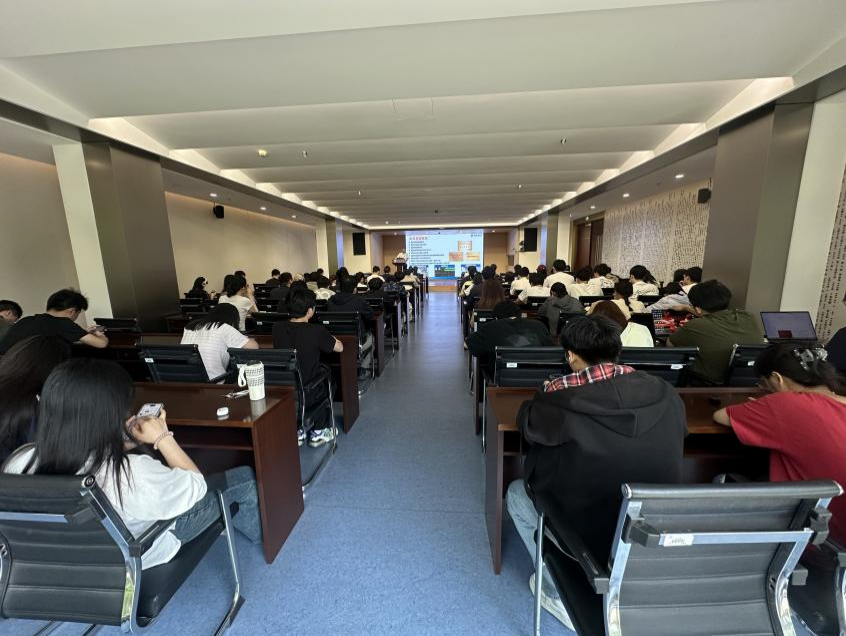
Medical artificial intelligence is accelerating from scientific research to clinical practice, showing tremendous potential in scenarios such as image interpretation, pathological analysis, decision support, and medical record generation. Zuo Xianbo pointed out that through deep learning and large model technologies, AI can assist doctors in improving diagnostic efficiency and consistency, alleviating human resource shortages, and has made substantial breakthroughs especially in areas such as specialized disease analysis. However, clinical applications still face data silos, insufficient model generalization, interpretability challenges caused by "black-box" decision-making, as well as challenges in medical safety and ethical regulation. He emphasized that in the future, it is necessary to strengthen the deep integration of evidence-based medicine and AI, establish standardized data governance and evaluation systems, and promote AI from "assisted perception" to "assisted cognition," truly achieving a value closed loop that empowers clinical practice and serves patients.
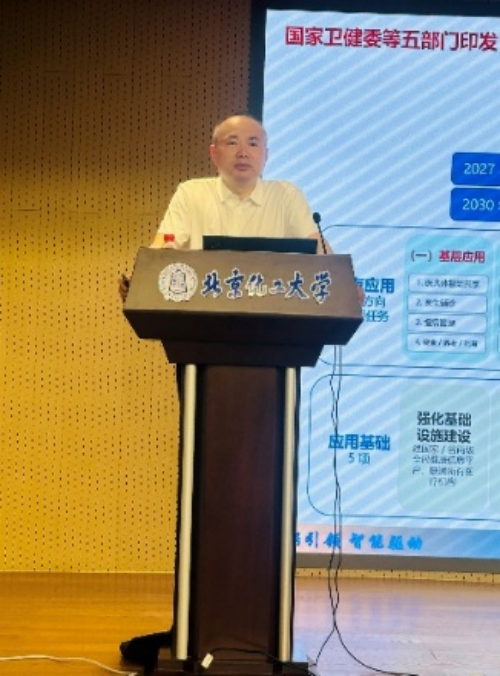
Zuo Xianbo stated that Beijing University of Chemical Technology has unique advantages in biomedical engineering, artificial intelligence algorithms, and materials science, and looks forward to deep cooperation in medical big data modeling, intelligent diagnostic algorithm optimization, and interpretable AI research in the future, jointly promoting medical-engineering interdisciplinary innovation and facilitating the transfer of scientific achievements to clinical frontlines.
As an authoritative expert in medical big data and bioinformatics, Zuo Xianbo currently serves as Director of the Big Data Center at China-Japan Friendship Hospital, Deputy Director of the Key Laboratory of Clinical Big Data Standardization and Integrated Application at the National Health Commission, Executive Dean of the Institute of Innovation in Intelligent Medicine, and Deputy Director of GCP. He also holds multiple academic positions, including Chairman of the Dermatology Genetics Branch of the Chinese Genetics Society, President of the Digital Medicine Innovation Branch of the China Medical and Health Culture Association, Chairman of the Health and Medical Big Data Application Branch of the Beijing Society of Translational Medicine, Vice President of the Target Identification and Treatment Committee of the World Chinese Medicine Federation, and Deputy Chairman of the Health Technology Achievement Transformation Committee of the China Pharmaceutical Quality Management Association, demonstrating profound expertise in the clinical translation and application of medical big data and artificial intelligence.
As the first event in this year's lecture series, future invitations will continue to invite renowned experts in clinical and cutting-edge technology fields to help Beijing University of Chemical Technology faculty and students broaden their medical horizons and inspire innovative thinking.
The event was organized by the Biomedical Translational Engineering Research Center of Beijing University of Chemical Technology - China-Japan Friendship Hospital and the Education Department of China-Japan Friendship Hospital, while the Party Branch of the Education Office of China-Japan Friendship Hospital and the Student Union of China-Japan Friendship Clinical Medical School were the organizers.
Image: Zhao Man
Manuscript: Zhao Man
Reviewed by: Jia Guanglian, Wang Xing, Cao Hui