
In order to thoroughly implement the requirements of integrated development in education, science, and talent, continuously strengthen the ideological and political foundation of university teachers, and solidify the bottom line of academic integrity, to empower the talent cultivation work of universities with innovative education models, the 11th session of the innovative demonstration workshop for ideological and political work of university teachers in Beijing, Knowledge-Action Workshop (hereinafter referred to as the Knowledge-Action Workshop), was successfully held in the Beijing Synbiomaterials Innovation Center of Beijing University of Chemical Technology on the afternoon of June 22, 2026. As a member unit of the Knowledge-Action Workshop Alliance, the School of Life Sciences and Technology at Beijing University of Chemical Technology actively selected leaders, administrative personnel, and teachers to participate in the study and exchange activities organized by the Knowledge-Action Workshop, and hosted this event.
Leaders and experts from multiple universities and research institutions, including Beijing Normal University, Beijing Union University, Beijing Vocational College of Transportation, North China University of Technology, Beijing University of Aeronautics and Astronautics, University of Chinese Academy of Sciences, Beijing University of Technology, National Academy for Food and Nutrition Safety Evaluation, China Fire and Rescue College, China Agricultural University, China University of Geosciences, and Beijing Academy of Socialism, gathered together to conduct in-depth discussions and exchanges.
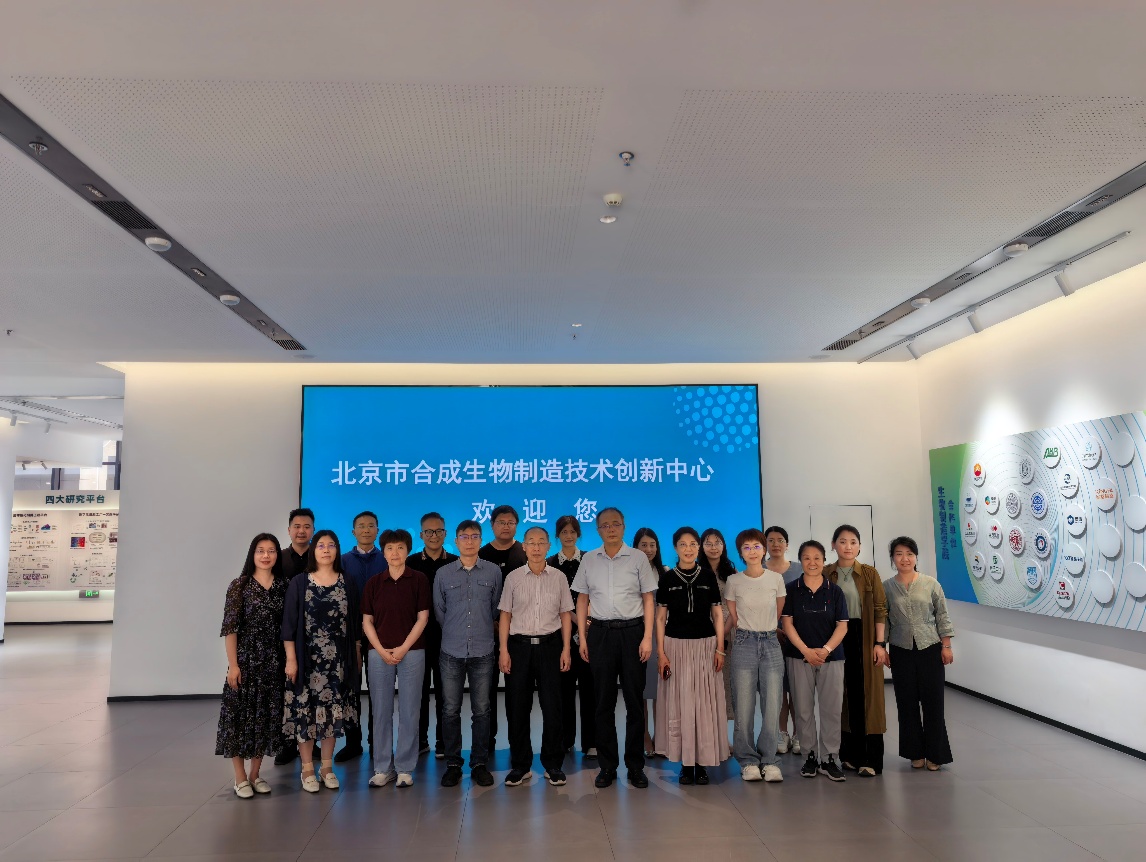
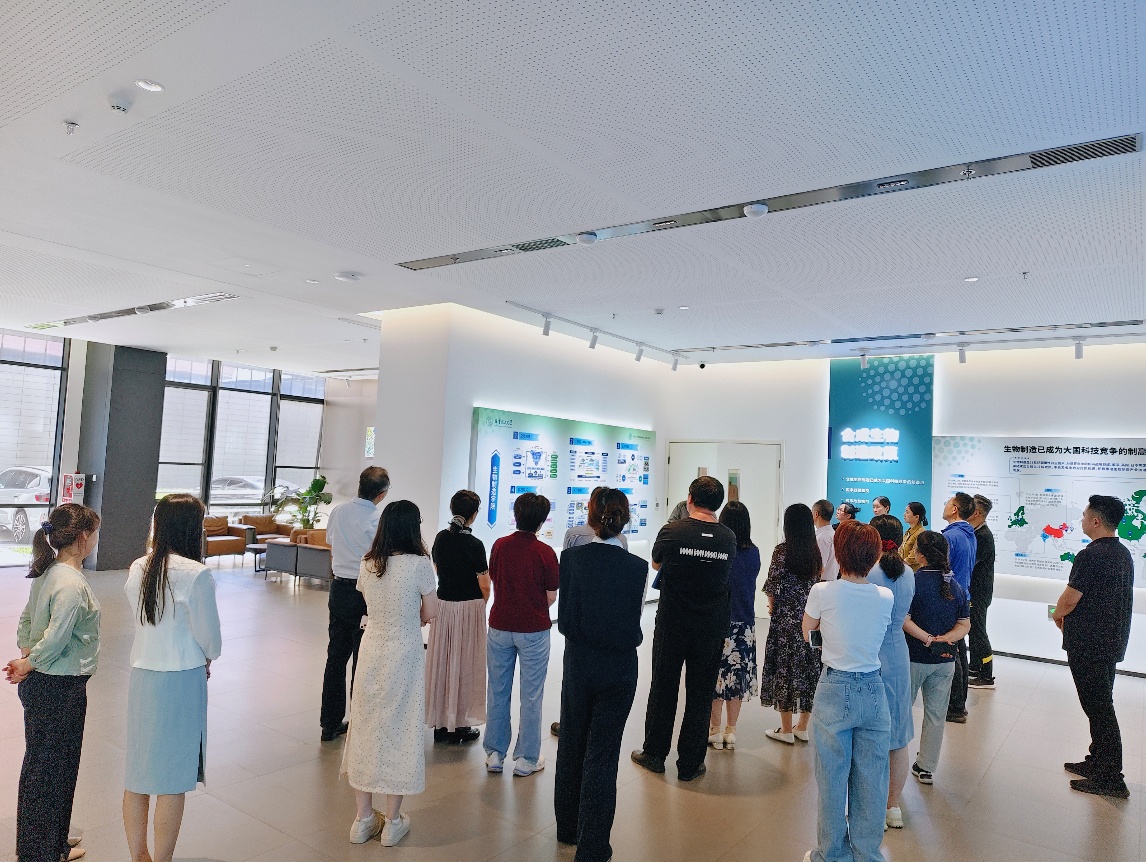
At the beginning of the event, all attendees took a group photo together in the lobby on the first floor of the Beijing Synbiotech Manufacturing Innovation Center. Subsequently, they visited the innovation center for an on-site tour. Guided by on-site explanations, the participants gained a detailed understanding of the research platform construction, frontier technology breakthroughs in biomanufacturing, industry-academia-research integration implementation, and the cultivation of high-level scientific research talents at the center. They directly experienced the practical outcomes of Beijing University of Chemical Technology's efforts to integrate scientific research innovation, talent cultivation, and teacher ethics and conduct development through major scientific research platforms. The discussion focused on how research platforms foster academic integrity culture and how to carry out practice-based education leveraging scientific and technological innovation carriers.
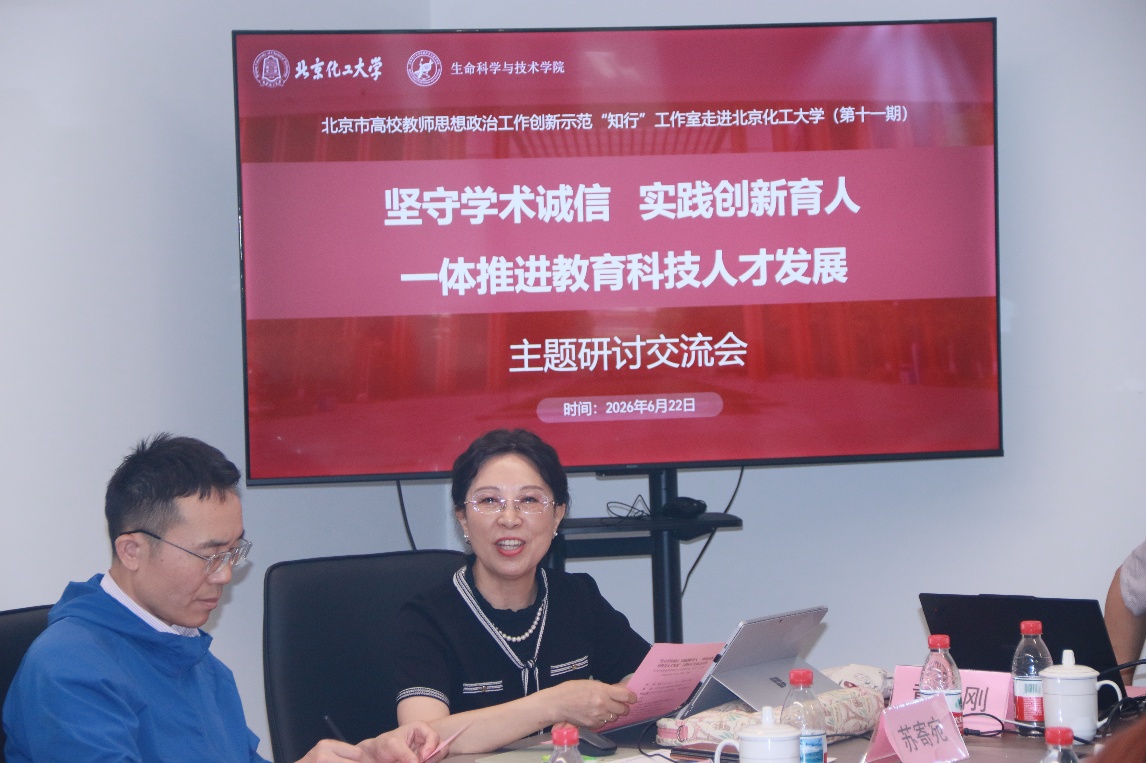
Subsequently, the symposium and exchange meeting was officially held in the conference room on the first floor of the Innovation Center. The meeting was chaired by Professor Su Jiwan, from Beijing Normal University and the project leader of the Knowledge-Action studio. She introduced the attending leaders and experts one by one, clarifying that the participating units of this exchange cover diverse entities, including comprehensive universities, science and engineering colleges, vocational schools, research institutes, and specialized feature schools, thereby establishing a platform for ideological and political education exchange across disciplines, fields, and institutions.
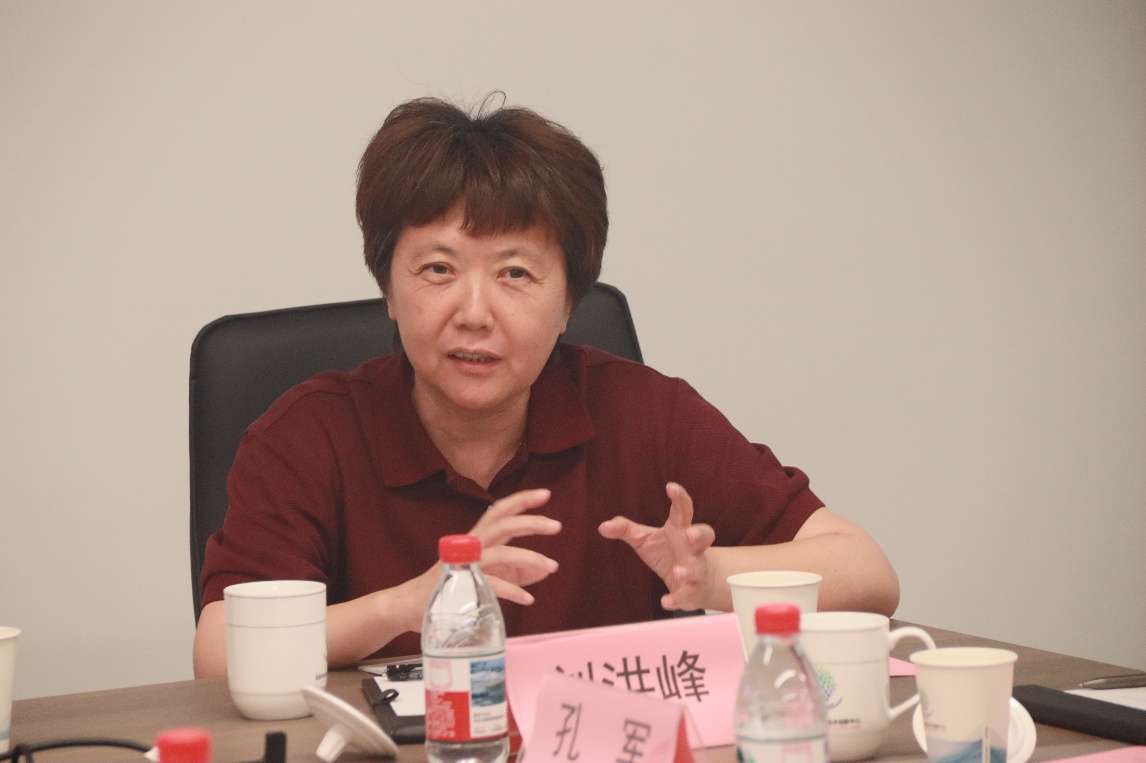
Later, Tong Yigang, Dean of the School of Life Sciences and Technology at Beijing University of Chemical Technology, made a thematic presentation. Tong Yigang comprehensively introduced the basic situation of the school's disciplinary layout, faculty and staff development, talent cultivation system, major research breakthroughs, etc. He conducted a systematic report around core issues such as the long-term mechanism for upholding academic integrity, the path for cultivating students at the forefront of scientific research, and the coordinated development of education, science, and talent based on disciplinary advantages. He shared the school's work measures and practical experience in strengthening the ethics and conduct of teachers, standardizing scientific research behavior, fostering a sound academic atmosphere, guiding young teachers to abide by academic bottom lines, and cultivating new eras of talents through scientific and innovative practices.
The exchange and discussion session was lively, with participants focusing on the theme about Upholding Academic Integrity, Practicing Innovative Education, and Integratively Advancing the Development of Education, Science, and Talent, sharing their insights based on the actual work of their respective schools and units. Everyone discussed key issues such as the publicity and education mechanisms for academic integrity in higher education, research integrity management for young teachers, the integration of ideological and political education in science and engineering majors, the exploration of the educational function of scientific and technological innovation platforms, the cross-institutional collaboration on ideological and political education for teachers, and the integrated advancement of education, science, and talent. It was unanimously agreed that the more highly education is valued, the stronger its effectiveness in serving national development. This also sets higher standards and stricter requirements for the comprehensive abilities, ethical conduct, and ideological and political literacy of all teachers. Upholding academic integrity is the fundamental requirement for higher education institutions to govern and educate, as well as for scientific research and innovation. It is necessary to continuously deepen the reform of practice-based education models, break down institutional barriers, and rely on the Knowledge-Action studio platform to carry out regular exchanges and collaboration, consolidating educational strength to enhance the quality and efficiency of ideological and political work for university teachers in the capital, contributing to the integrated advancement of high-quality development in education, science, and talent.
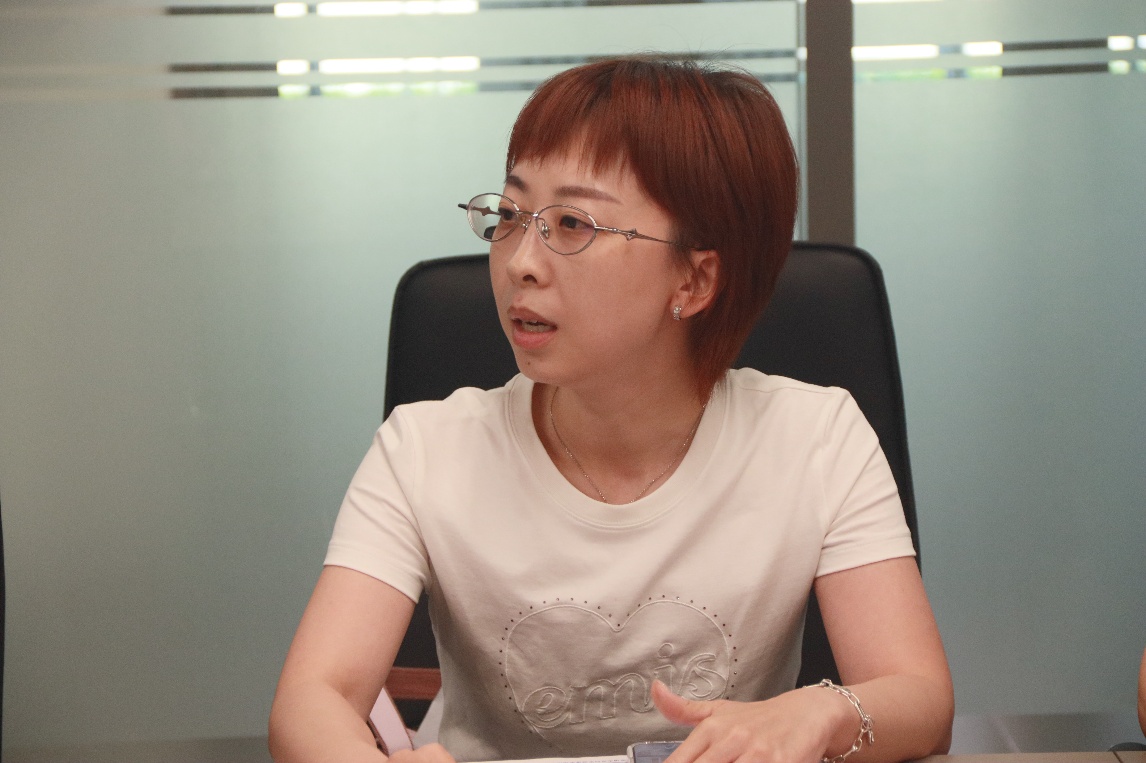
Su Jiwan gave a concluding speech. She based her remarks on the overall layout of ideological and political work for teachers across the city's universities, highlighting the significant importance of this seminar. She made arrangements focusing on key tasks such as building teachers' ethics and conduct in the new era, normalizing education on academic integrity, innovating platforms for ideological and political education, and addressing bottlenecks in the collaborative development of education, technology, and talent. She noted that universities should take academic integrity as the foundation for their scholarly pursuits, integrating the cultivation of teacher ethics into the entire process of research and teaching. Relying on various scientific and technological innovation platforms and studio bases, universities should build inter-university exchange channels, integrate the educational resources of all schools, learn from each other's innovative practices in ideological and political work, and promote the formation of a joint force for the whole-process, all-round, and comprehensive education.
Image: Yang Jia, Jia Guanglian
Script: Jia Guanglian
Reviewers: Liu Min, Tong Yigang, Cao Hui